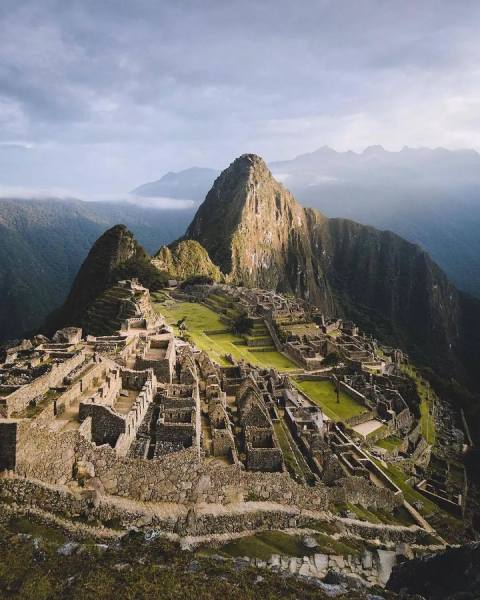
Most travellers picture Machu Picchu first. The terraces, the misty peaks, and that one photo spot near the guard hut. What gets missed is everything that happens before you reach the gate. Trips to the Inca Trail and tours to Machu Picchu are often sold as separate listings. They are not to be separated as one earns the other. And once you walk a few kilometres of original Inca stone, the citadel stops feeling like a postcard and starts feeling like the place you fought to reach.
The Walk Changes How You See the Citadel
Buses can drop you at Machu Picchu in the morning. You will see it. You will photograph it. You might not feel it. This is why trips to Inca Trail attract travelers who want more than a postcard moment.
The trail does something different. Four days of cloud forest, switchbacks, and quiet camps slowly tune your eyes to the Inca craftsmanship. By the time you cross the Sun Gate at dawn, you have already seen Runkurakay, Sayacmarca, and Wiñay Wayna. Machu Picchu becomes the final chapter, not the only one. Few trips to Inca Trail leave you feeling rushed at the summit because the journey has already done its work.
That shift matters. Travellers who only do day tours to Machu Picchu often say the visit felt rushed. Those who hike in describe it as quiet relief. A bit of disbelief, too.
Permits, Crowds, and the Thing Nobody Mentions
Inca Trail permits sell out months ahead. For peak season, sometimes six or seven months. Miss the window, and you are looking at the Salkantay or Lares route instead, which are beautiful, but not the same.
Here is the part most operators skip. Permits are tied to your passport number. You cannot transfer them. You cannot buy them at the last minute from a shop in Cusco. If your name is not registered with the government before the season fills up, the classic route is closed for that year.
Tours to Machu Picchu by train have more flexibility. Tickets open up. Trains run daily. So pairing a trekking permit with a train return gives you both options on one trip, with a backup if weather or altitude forces a change.
Altitude Is the Real Decision
Cusco sits at 3,400 meters. The trail climbs higher, with Dead Woman’s Pass at around 4,200. Some people feel fine. Some people lose a day to headaches and nausea, no matter how fit they are.
This is where pairing the two helps. A few days in Cusco and the Sacred Valley before the trek lets your body adjust. The Sacred Valley sits lower than Cusco, which is perhaps the best place to sleep during acclimatization. Then the trek. Then Machu Picchu is the reward.
Skipping that buildup is where trips go wrong. People fly in, hike the next day, and spend the summit morning trying not to throw up.
What a Combined Trip Actually Looks Like
A typical pairing through Altitude Peru might run like this:
- Day 1 to 2: Cusco arrival, light walking tour, coca tea, early sleep
- Day 3: Sacred Valley with Pisac, Moray, and the Maras salt mines
- Day 4 to 7: Classic Inca Trail, four days, three nights, finishing at Machu Picchu
- Day 8: Return train to Cusco, rest, flight home
You can shorten it with the 2-day Inca Trail. You can stretch it with Rainbow Mountain or Humantay Lake. The structure stays the same. Acclimatize, walk in, and arrive at the citadel, rather than being dropped off.
Start the Conversation
Adrian handles trip planning over WhatsApp at +51 972 153 449. Send your travel dates, group size, and rough fitness level. He will check current permit availability and put together an itinerary that fits. No deposit is needed to start asking questions.
Featured Image Source: https://altitude-peru.com/wp-content/uploads/2024/11/292002666_453220002859582_8441840442078573479_n-1.jpg