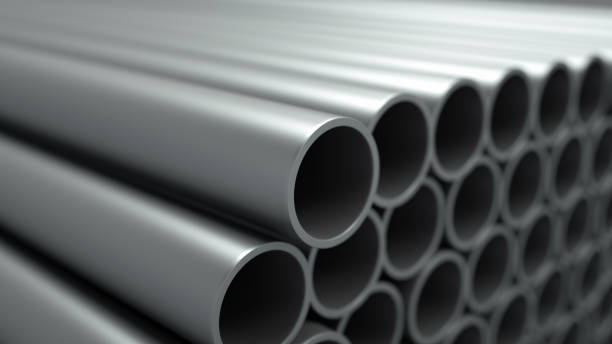
The wrong tubing choice rarely announces itself early. It shows up in unplanned shutdowns, pressure losses, and repair cycles that should never have happened. Industrial systems running under high stress or sustained heat demand tubing specified for the job, not just sourced at the lowest available price. Getting this right from the start saves real money later.
Where Pressure Meets Material Limits
Wall Thickness as a Structural Decision: Applications involving high-pressure hydraulics, load-bearing structural supports, and cyclic mechanical stress require tubing that holds its shape under repeated force. Heavy wall stainless steel tubing is the material of choice in these environments, offering the wall mass needed to resist deformation, manage vibration fatigue, and maintain dimensional integrity across long service runs without thinning prematurely.
Stabilized Alloys for High-Temperature Service: Thermal cycling is one of the more underestimated stresses in industrial systems. The 321 stainless steel tube addresses this directly through its titanium stabilization, which prevents carbide precipitation at elevated temperatures and maintains alloy integrity during repeated heat cycles. Aerospace assemblies, power generation components, and exhaust handling systems rely on this grade because standard austenitic grades cannot handle sustained exposure above 800 degrees Fahrenheit.
Specifications That Shape Long-Term Outcomes
Reading Performance Data Before Committing to a Grade: Procurement teams that review material data sheets in detail tend to catch compatibility issues before they become field problems. Yield strength figures, temperature limits, and corrosion resistance ratings all tell a story about how the material will perform once installed. Skipping this step and relying on general-purpose grades for specialized applications is one of the more common causes of premature material failure.
Matching Tube Specifications to System Requirements: Engineering teams that skip the specification checklist often find out about the gap at the worst possible time. Wall thickness tolerances, pressure ratings, and surface finish requirements all play a role in how well a tube fits and performs within a larger system. Reviewing these factors before ordering avoids fit issues, delays, and performance gaps that are expensive to correct.
Key factors to confirm during material selection:
- Minimum and maximum operating pressure ratings
- Temperature range the alloy can sustain without losing structural integrity
- Required surface finish for corrosive or sanitary applications
- Wall tolerance range and its effect on fit and assembly
- Availability of mill test reports and compliance documentation
Sourcing Materials With Traceability Built In: Traceability is not a paperwork issue. It is a performance issue. When a tube fails and there is no documentation linking it to a certified heat or melt number, isolating the problem and validating a fix becomes much harder. Buyers who require full material traceability from their suppliers tend to spend less time dealing with quality disputes and more time keeping their systems running.
Getting the Right Grade to the Right Application
Intergranular Corrosion as a Hidden Risk: For chemical transfer lines, marine piping, and wet process environments, intergranular corrosion is one of the less visible threats to long-term system performance. This type of attack targets grain boundaries within the alloy and can degrade structural integrity before visible signs appear. Low-carbon or stabilized grades provide meaningful protection against this failure mode where standard grades fall short.
Why Correct Specification Reduces Total Cost: Opting for a premium alloy grade or heavier wall specification often looks expensive at the purchase order stage. In practice, systems built on correctly specified tubing require fewer repairs, fewer replacements, and shorter downtime windows over their service life. The difference in upfront material cost is typically recovered within the first maintenance cycle that simply does not happen.
Precision Now, Fewer Problems Later
Industrial systems built on the right tubing specifications perform better and last longer across their operational lifespan. If your current sourcing process does not include grade verification, wall thickness review, and full certification checks, there is a real cost being deferred. Contact a qualified tubing supplier today and get the certified material data your project actually needs.
Featured Image Source: https://media.gettyimages.com/id/166141520/photo/metallic-pipe.jpg?s=612×612&w=0&k=20&c=iTNg3NABDDr2aUPyQvIrRJmlQFO6IACK4GnnOyx1lWM=