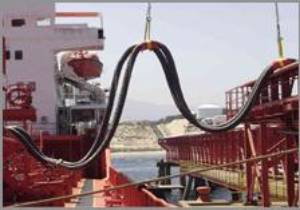
Chemical handling represents high risk when dealing with any hazardous or corrosive material involved. In fact, risks related to safety in the whole transfer process need to be prevented by avoiding leaks, spills, and accidents that may harm laborers, cause damage to environmental systems, or lead to expensive cleanup operations. Enhanced safety within chemical handling system components like composite hoses as well as camlock couplings significantly reduces risk factors and enhances containment while always complying with industry standards.
Composite Hoses
Composite hoses are engineered to safely transfer a variety of chemicals and liquids. Among the many types of hoses available, composite hoses feature an astonishingly tough construction. The cross section of virtually any composite hose consists of a thermoplastic inner liner, several layers of reinforcing fabric, and a tough outer layer.
These multilayer construction composite hoses have high hydrocarbon and chemical resistance while also maintaining good strength and flexibility as well as abrasion resistance. The rigidity of composite hoses also ensures that they can take normal movement and bending during operation without sustaining any damage.
The Use of Camlock Couplings in Fluid Transfer
Camlock couplings are widely used in fluid transfer systems due to their ease of use and because of the secure and tight seal connection, ensuring the system is leak resistant. Based on the cam lever locking mechanism, these couplings lock two components into position, thus ensuring an exceptionally tight seal to avoid spills or leaks. The simple design easily allows for fast connections and disconnections without compromising safety, especially within time-sensitive environments.
Reduction of Risk Factors with Composite Hoses and Camlock Couplings
In chemical handling, a leakage or spillage is considered to be the most common and serious occurrence. Unintentional loss of any chemical through spillage leads to pollution and toxic exposure which is unintentional. To avoid such accidents, composite hoses are designed with a reinforced structure and enhanced permeation resistance. Such details in using camlock couplings minimize spills even further.
Camlock coupling ensures a secure connection that will prevent accidental disconnections resulting in hazardous material leaks; hence, the transfer is smooth and safe. Compressing hoses and camlock couplings can resist pressure with a high fluid pressure. Therefore, these parts play important roles in many industrial activities since they help minimize potential dangers from high-pressure fluids. The parts enhance tighter sealage and lower breaks of hoses.
Enhanced Containment and Spillage Control
Composite hoses are much more effective in containment features, especially in hazardous chemical transfers. Its construction not only prevents leakage but also the evaporation of volatile substances that can be severe hazards for health and safety. These are used with camlock couplings, again creating a complete seal and protecting the operation being performed.
In Conclusion
Composite hoses, couplings and camlock couplings integrated into the chemical transfer systems are important parts that improve safety to a substantial level through risk, containment and hazardous spills prevention. These are strong, flexible, and easy to use and should be exposed to the challenges of dealing with corrosive and hazardous chemicals. With the adoption of quality hoses and couplings, industries will improve safety, protect the workers, and ensure strict regulatory compliance, thus making the workplace safer and decreasing accidents and environmental impact.
Featured Image Source: https://www.jreltd.com/images/composite/pic3.jpg