Your office WiFi keeps dropping during client calls. Employees complain about dead zones near the conference room. Customers in your retail space can’t connect to check prices online.
Sound familiar?
Poor WiFi coverage costs Kenyan businesses more than just frustration. It drives away customers, kills productivity, and makes your company look unprofessional. The good news is that UniFi access points can fix these problems without breaking your budget.
What Makes UniFi Different
UniFi access points work differently from the router your ISP provided. Think of it this way: your ISP router is like having one light bulb for your entire office. A UniFi setup is like installing proper lighting in every room.
These devices create a mesh network. One access point talks to another, blanketing your space with consistent coverage. No more switching between networks as you move around.
DataWorld‘s controller software gives you real-time data on every connected device. You can see who’s hogging bandwidth, block problem devices, or create separate networks for guests and staff. All from your phone.
Which Model Should You Buy
UniFi offers several models. Picking the right one depends on your space and budget.
For Small Offices (Under 50 People)
The UniFi 6 Lite handles basic needs well. It covers about 120 square meters and supports 300+ devices. Most Nairobi offices find two or three units enough for full coverage.
Price sits around KES 12,000 to 15,000 per unit. Not cheap, but you won’t need to replace it in six months like those generic routers.
For Larger Spaces
The UniFi 6 Long Range pushes signals further. One unit can cover 180 square meters. If you’re running a restaurant, retail store, or multi-floor office, this makes more sense.
Expect to pay KES 18,000 to 22,000 per access point.
Outdoor Coverage
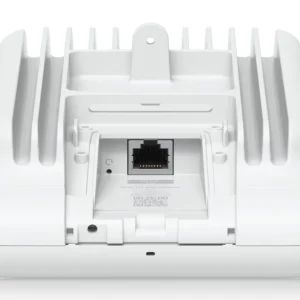
Got a parking lot, outdoor seating area, or compound that needs WiFi? The UniFi 6 Mesh handles weather and distance better than indoor models.
These run about KES 25,000 each but save you from constant replacements.
What You Need to Know Before Buying
UniFi systems require a bit more setup than plug-and-play routers. You’ll need:
- A UniFi controller (can run on any computer or cloud)
- Basic network knowledge, or someone who has it
- Power over Ethernet (PoE) injectors or a PoE switch
- Ethernet cables to each access point location
Perhaps the biggest surprise for first-time buyers is that UniFi access points don’t include a built-in router. You’ll keep your existing router and add these for better coverage.
Installation Costs in Kenya
Most businesses spend between KES 30,000 and 80,000 for a complete UniFi setup. This includes:
- 2-4 access points
- PoE switch or injectors
- Professional installation
- Network configuration
Cheap upfront? No. But compare that to constantly replacing consumer routers or losing business due to poor connectivity.
UniFi access points cost more than basic routers. They also last longer, perform better, and give you control that consumer equipment never will.
Your business depends on reliable internet. Dead zones and dropped connections don’t just annoy people. They cost you money every single day.
Ready to fix your WiFi problems? DataWorld can help you start by mapping your coverage needs and calculating how many access points your space requires.
Featured Image Source: https://www.dataworld.co.ke/wp-content/uploads/2025/08/Ubiquiti-UniFi-U7-Pro-Outdoor-Access-Point-U7-Pro-Outdoor-5-300×300.webp